
NDT EQUIPMENT
EDDY CURRENT EQUIPMENT
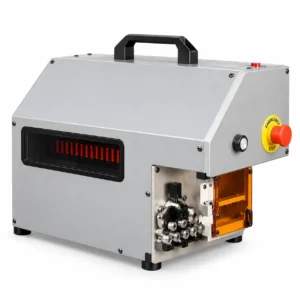
Eddy Current Equipment is an advanced electromagnetic NDT system used to detect surface and near-surface defects, material variations, corrosion, and other discontinuities in electrically conductive materials. It is widely used in aerospace, automotive, power generation, manufacturing, heat exchanger inspection, and quality control.
NEED EQUIPMENT INFORMATION?
Talk to our NDT experts for
specifications, availability and quotation.
PRODUCT INFORMATION
Product Details.
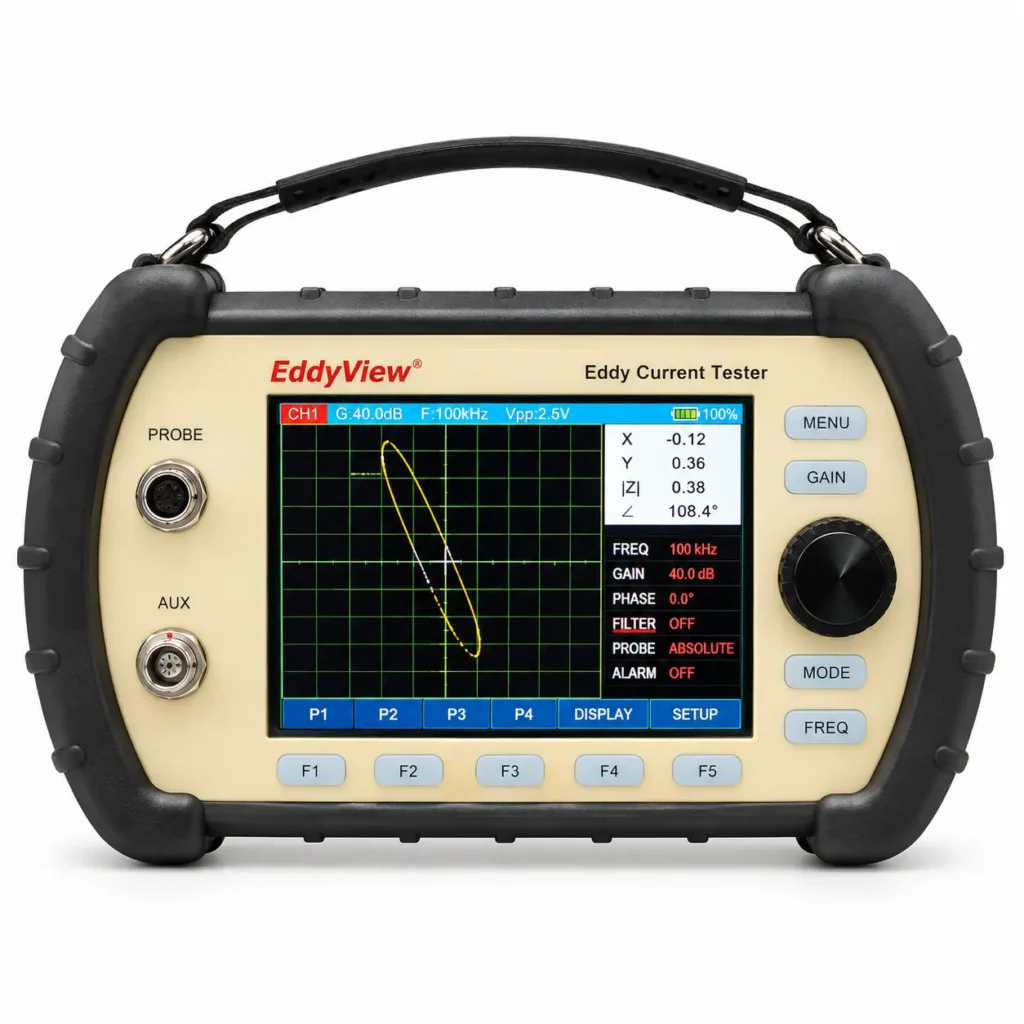
Eddy Current Equipment is a professional Eddy Current Inspection (ECI) system designed for non-destructive testing of electrically conductive materials. It operates using the principle of electromagnetic induction, where an alternating current in an inspection probe generates a changing magnetic field that induces eddy currents within the test material.
When the material contains a discontinuity such as a surface crack, corrosion, pitting, material thinning, or conductivity variation, the flow of eddy currents is disturbed. The resulting changes in the probe’s electrical response are detected and processed by the instrument, allowing inspectors to identify and evaluate potential defects.
Modern eddy current inspection equipment can provide real-time signal visualization through impedance-plane displays and digital graphs, along with functions such as frequency selection, gain adjustment, filtering, phase control, and signal analysis. Depending on the system and probe configuration, it can be used for surface inspection, tube testing, material sorting, conductivity measurement, and coating-related applications.
Key Features
- Electromagnetic non-destructive testing (NDT)
- Detects surface and near-surface discontinuities
- Real-time signal and impedance-plane display
- Adjustable inspection frequency and gain
- Suitable for different probe configurations
- Useful for crack and corrosion detection
- Supports tube and component inspection
- Suitable for laboratory and field applications
- Non-contact inspection capability
Applications
- Aerospace component inspection
- Aircraft fastener-hole inspection
- Heat exchanger and condenser tube testing
- Power plant tubing inspection
- Weld and weld-toe crack detection
- Corrosion and material-thinning inspection
- Aircraft structure inspection
- Conductivity and alloy sorting
- Manufacturing quality control
- Material and heat-treatment verification
- Surface defect detection
Inspection Capabilities
Eddy Current Equipment can be configured for applications including:
- Surface crack detection
- Near-surface defect detection
- Corrosion and pitting detection
- Heat exchanger tube inspection
- Conductivity measurement
- Alloy/material sorting
- Hardness and heat-treatment evaluation
- Coating-related measurements
- Automated and high-speed scanning
How Eddy Current Inspection Works
- An AC signal is supplied to the inspection probe.
- The probe generates a changing electromagnetic field.
- Eddy currents are induced in the conductive test material.
- Defects or material variations disturb the eddy-current flow.
- The instrument detects changes in the probe response.
- The signal is displayed for analysis by the NDT technician.
Advantages
- High sensitivity to small surface defects
- Fast, real-time inspection
- No permanent damage to the component
- Can inspect without direct electrical contact
- Suitable for automated inspection systems
- Useful for high-speed scanning
- Provides quantitative and visual signal information
Limitations
- Requires electrically conductive materials
- Inspection depth is limited and depends on material and test frequency
- Surface condition can influence results
- Accurate interpretation requires trained NDT personnel
- Probe selection and calibration are important for reliable results
VISIONPRO NDT
Get a Quote
Need the Right Equipment for Your Application?
Speak with our team to discuss your inspection requirements and get the right equipment recommendation.